
 Wolves, Outsider Art and Subculture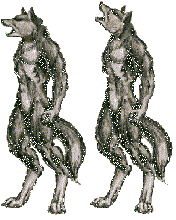
Teen girls like wolves.
You probably know what I’m talking about, when I say that teen girls like wolves. It’s a recognizable archetype: the wolf girls, the wolfaboos, the furries, the deviantart wolf comic artists, the “teen werewolf” subculture, the therians and otherkin. Really, this affinity shouldn’t be a surprise. Humanity itself has been in love with wolves since our species crossed paths. They haunt our stories, they curl up beside us in bed, and they are big, bad, and beloved. But when did they become the symbol of teen girl angst that they’ve become? Why are edgy, cringe wolf OCs (original characters) so pervasive, why was the wolfaboo such a well known phenomenon? And, crucially, why did we, the “wolf girls” of the late 2000s, all seek to become wolves ourselves?
I am one of those wolf girls- I always have been, and so I feel uniquely equipped to answer these questions. I’ve howled on the playground, I’ve made a thousand edgy wolf characters with emo hair, I’ve partook in our digital mythology, and I am a loyal adherent even still. I am a self-identified werewolf and someone who is captivated by outsider and amateur art, including the art made by these furry-adjacent “wolf OC” communities. What most look at as an object of cringy ridicule and teenage histrionics, I find deeply compelling. The art of an amateur, of a child, is unfiltered, full of feeling and absent of the shame that is the greatest roadblock to emotionally honest art. In the dawning of the internet, it became easier than ever to share art, to make friends, to build a worldwide pack.
But why wolves? It’s simple- they are man’s best friend, and its worst enemy. It is not either extreme but rather this perfect duality that makes the wolf such an enticing cultural archetype. They inhabit any role that man is willing to cast them in. They are the great animal metaphor. They are everywhere, living across the globe. For almost any place you can imagine, there is probably a species of wolf, or at least some other similar canid, that calls it home. The bond between man and wolf goes back to the caveman days. It’s the reason why we have dogs. Even still, they are dangerous. They are predators, and come equipped with the fangs and powerful bite needed to protect themselves. In those days, a wolf meant a threat to your livelihood. A hungry, desperate wolf would seek out livestock when no other prey was available. For as long as there have been wolves, mankind has both hated and loved them.
Hence, the fairy tales. The wolves that lurk solitary in the woods, ready to pick off an unsuspecting little piggy, sheep or red-hooded girl. Even still, wolves are also a symbol of ecological recovery, an emissary of the natural world, in part because the Yellowstone wolf reintroduction was one of the most high profile examples of a keystone species restoring an ecosystem in the wake of human interference. More perniciously, wolves have become a symbol of toxic machismo, with outdated myths about pack dominance hierarchy becoming the backbone of the online “manosphere”, fixated upon becoming the “alpha”. In reality, while there is somewhat of an order of dominance in wolf socialization, packs actually typically consist of the breeding pair and multiple litters of offspring, with age often corresponding to authority within the pack. Older litters help to raise the younger litters, and then disperse to find their own mates when they come of age. The strict pack hierarchy that culture has latched onto was first observed in captive, unrelated wolves, not in the wild, and Doctor L. David Mech, the man who both first published the “alpha” idea and then later disproved it when he observed wolves in the wild, has spent his whole life trying to combat the misinformation that has spread as a result of his initial observations. Despite these efforts, the figure of the alpha remains in public consciousness. Perhaps there is something to be said, that men see themselves in the social structure that is imposed by captivity.
In the cultural view of the wolf, we see violence and softness, beauty and danger intermingle and clash. Perhaps it is this dual nature that led to the tales of lycanthropic duality. That who is both man and beast. Duality is in the nature of the predator: Wolves are protective, sociable and loyal, and yet also must kill to live and fight to survive.
The wolf struggles. The wolf is misunderstood. More icon, more myth, than living creature.
And so too misunderstood are those left to the woods by society. Girls. Members of the LGBT community. The neurodivergent. Bullied children. All these groups and more are pushed to the margins in service of normality, forced to hide and mask themselves, a sort of human animality. Is it any coincidence that these are the demographics who find themselves in the wolf? It is that the wolf is feared and hated that makes them so easy to empathize with. Wolves are among the most popular species for furries and therians to identify with, demographics that are overwhelmingly gay and/or neurodivergent; in a more domesticated twist on canine identity, the “puppygirl” has become a popular archetype among transfem communities. To identify as a canine simply has a nearly universal appeal for those who are ostracized by the cishetero patriarchy. From my memory, too, most of my fellow “wolfaboos” I knew back then fit into at least one of these categories of ostracization. Especially misogyny. Anecdotally, the teenage cringey wolf fan is often a girl, or assigned female at birth, or is otherwise fem-aligned or placed under the staring microscope-lens of misogyny. Not always. But very, very often.
The femininity of the edgy wolf OC can easily be proven by looking at the wolfaboo oeuvre. The comics, animations, artwork, and influences on this little subculture. The wolfaboo oeuvre is defined by its furry, xenofiction and scene influences, the presence of “sparkledog” design ethos, and, of course, the wolf in starring role, often with an angsty backstory, tragic past, outsider status, and mythic destiny. Many “wolfaboo stories” take direct inspiration from the likes of Warrior Cats, Balto, and other similar xenofictional works in this vein. Also popular were the Wolves of the Beyond books, which explore the struggles of disabled wolves in an ableist society, and the wildly popular Wolf’s Rain anime, which follows a group of wolves who mask as humans in a post-apocalyptic setting searching for a mythical paradise.
Balto, particularly, was formative for the early 2000s wolfaboo style, both visually and thematically. Deviantart and Furaffinity are both full to bursting with Balto fanart or furry art that takes direct inspiration from the film’s visual style. The film tells an extremely fictionalized adaptation of the 1925 serum run to Nome, Alaska, and in this fictional version, Balto is not a sled husky but rather a stray wolfdog. He is outcast by the humans of the town and bullied by most of the local dogs. It is not by shunning his wolf side but rather embracing it, encountering a white wolf spirit in the snow and following in its pawsteps, that he is able to complete the run and deliver the medicine to the sick children back home. The wolf is both the reason for his outcast status and the source of his heroism.
The straight-to-DVD sequel, Balto II: Wolf Quest, was also extremely popular among these subcultures, and featured a female protagonist, Aleu. Similar to her father, Aleu is ostracized due to her wolf heritage, manifesting in more obvious ways than her parents or siblings. Scruffy brown fur, howling when she’s excited, biting and growling, big paws... She struggles to get adopted, and her parents believe that she should further assimilate, with Balto stating that being different is painful, and at one point she is almost shot because of her appearance. She is unwanted and unloved in the world of humans and dogs. Her status as wolfish outcast leads to self hatred and shame, running away from home to find herself. At the end of her quest, she discovers that her destiny is to lead the wolf pack across the water in the face of starvation: her place is among wolves, not dogs. Balto II: Wolf Quest stands out as a subgenre-codifying work in the wolfaboo oeuvre, featuring a teenage female protagonist who is not overly feminine, with emotional conflict that is given serious weight and respect by the narrative, where in the climax, her outcast status is reframed as her strength and joy, similar to the first film, and Balto must learn to respect her growing autonomy as a young adult wolf, not just his puppy. Aleu, also, does not trade one kind of conformity for another; her presence heralds change and transformation for the wolf pack. It is changed by her. Her role, the thematic core, is to accept and inspire change. Aleu stood out among other animated female characters in children's media, as strong, capable, emotionally complex, and not expected to perform femininity.

This, obviously, speaks to the teenage psyche in a very personal way. Anecdotally, these films and books were huge among the wolfaboo subculture. For example, I fondly remember trying to look up screenshots of the game WolfQuest on Deviantart and being annoyed at finding a bunch of Balto artwork mixed in no matter how much I could narrow down my search. When we are inspired and touched by art, we imitate. And so the little subculture began to create their own works. Comics. Animations. Illustrations. Games. All shared excitedly over the internet.
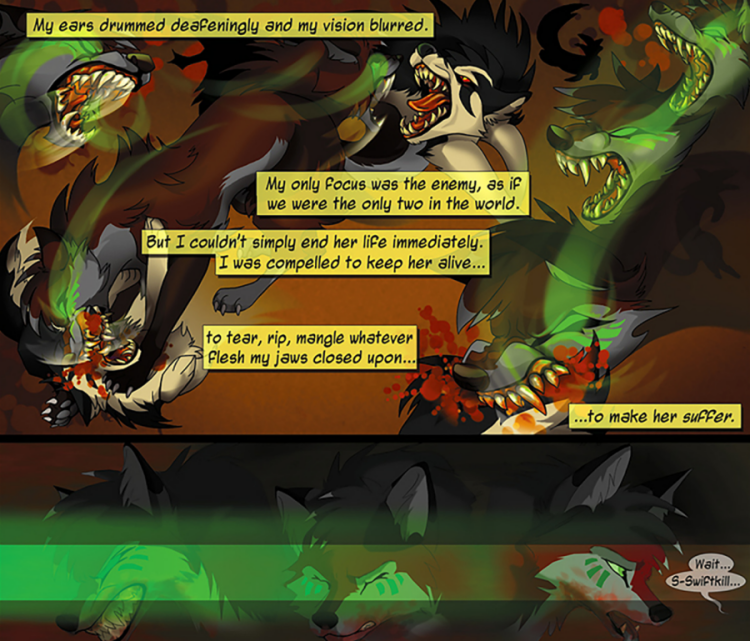
One of the most popular of the wolf comic scene, inspiring endless imitators on Deviantart, was The Blackblood Alliance by KayFedewa, the short beginnings of a tale about a war between dire wolves and sabretooth cats, where after a devastating invasion by the cats, the direwolves seek out the exiled “blackbloods” to stand and fight against them, extremely powerful wolves with an ability called “the fury”, a sort of berserker state- this sort of uncontrolled murder-state is a common trope among the edgy wolf OC. Among them is the comic’s protagonist, a female wolf named Swiftkill, who, when attacked by another member of the pack who intended to kill the breeding pair’s pups, activated her fury and, in the chaos, accidentally killed the pups she had been trying to defend. She is a character allowed to feel many negative emotions. Betrayal at how the pack banished her- refusing to fight back against her former friends and family. Anguish and grief at having been tricked into murdering innocent lives. Cynicism at her lot in life and towards the pack’s plight. The dissonance of being needed, but not wanted. Of being... misunderstood. Her sister Bloodspill is brutish, stoic and protective, similarly not conforming to typical roles female characters are cast in.
For female characters in the mainstream, these sorts of negative emotions and “masculine” character traits are uncommon; when they do appear, mean, standoffish, negative female characters with physical strength like Swiftkill’s are the first to be painted as unreasonable, bitches, mary sues. In the world of the Deviantart wolf OC, they are instead the norm, with their angst a very real source of pathos for the teen-girl audience. While BBA went unfinished after its initial run of pages, a few attempts have been made to revive the comic, including one that is set to begin this year, 2026, as of writing (and the new art style looks great!). KayFedewa clearly has a lot of affection for these characters, continuing to draw and reimagine them years later. The influence BBA had on the wolfaboo oeuvre cannot be overstated, with many comics regarded as being clones or imitators- often also featuring “edgy”, depressed, angry, grieving or otherwise subversive female protagonists, similar to Swiftkill. The art of BBA appears in many wolfaboo nostalgia moodboards and such, and the comic itself is called “the mother of all wolf comics”- it is a subcultural touchstone. You simply had to be there. In a way, it invented and further codified the genre of wolfaboo art, and in a way that presented a subversive femininity through its lead characters.
Over on Youtube, an animation scene too began to thrive in parallel with Deviantart’s comics, with a healthy dose of the “fanime” subculture. The White Wolf With The Blue Eyes, 86, Feral Pride, Wolves of the Mist, The Missing Light, and so much more. Viewers will recognize the hallmarks of the amateur Youtube animation: varying microphone quality, traced animations, and plots that thrive on melodrama far more than a cohesive story. I love these. I think it is truly beautiful that adolescent artists are so dedicated to their craft as to make whole episodes and even feature length films, purely for the love of it. I love the word “amateur”, down to its roots- amat means to love. Amateur, outsider art is made with love in the purest way. It has always fascinated and captivated me for that reason.
One such “wolf series” is Cow of the Wild by Tribbleofdoom, by far one of the more complete series in its genre. While the story began with the concept of a cow leaving her home to join a wolf pack, it expanded outward into a 26-episode long epic with a massive cast of wolves, a slew of violent death scenes, and lots of lore. The animation is a little wonky, the art airbrushed and placed over real life photograph backgrounds. The throughline of outcast status continues, with characters who are loners’ pups, exiles, “omegas” and more. The outdated science of “alpha” and “omega” wolves, while being the backbone of a particular kind of toxic masculinity, also finds use among the teen girl artist demographic, wherein their experiences with bullying and ostracization map easily onto the idea of the “omega”, a wolf who eats last and is treated like a punching bag by their packmates. Regardless of the truth, the “omega” becomes useful for the wolf artist, narratively. And what of Millie, the cow? In a metatextual way, she almost represents the audience, a surrogate for those who see the world of wolves as a powerful source of escapism. Tribbleofdoom has remained active in the online animation space, somewhat recently creating a lion series called My Pride, which explores topics such as ableism and homophobia- the subtext of the wolfaboo oeuvre becoming text.
Another well-loved wolf animation is Wolf Song: The Movie by ThunderKathryn, a full hour and a half long movie with a sprawling fantasy plot and a cast of candy-colored sparkle wolves. The theme of escapism once more appears, with the main character Kara and her brother being dogs that were transformed into wolves and accepted into the pack, crossing the threshold from mundane, domesticated doghood to the world of wolf-fantasy. Similarly to Swiftkill, Kara’s life is full of traumas, and in a flipped version of a common trope, male characters’ deaths are the spark for her self-actualization, a sort of reverse fridging: her brother, love interest, and father all die in the name of Kara’s development so that she may rise above it, counter to how female characters are often the ones killed off in mainstream media. ThunderKathryn, in the years following Wolf Song, has been very critical of her film, making several videos eviscerating the writing, designs, art, and more, redesigning Kara to be less of a Mary Sue, and so on, an impulse I am far too familiar with. But regardless of the film’s quality, Wolf Song is an incredible work of art. It is amazing that someone put in enough effort to create a feature length film, simply for the joy of it- with some genuinely impressive animation at times!

One might think that, since the wolf packs of these stories often tend to perpetuate these social conflicts, roles, and modes of ostracization, it runs counter to my point about the wolf representing a sort of escapism for the female audience. However, it only strengthens the escapism: the unfairness of the wolf world can be overcome with tooth and fang. It tells the teen audience that they are right: the world isn't fair, their suffering is not just, and they are right to feel pain. It tells them that they are special, important, and worthy of empathy. Some may call this style of storytelling, where characters are defined by their edgy backstories and traumatic pasts “tragedy porn” but these stories can be cathartic, especially when you’re young and trying to conceptualize concepts like death, trauma, guilt, and other unfamiliar ideas. It is an art form by adolescents, for adolescents, and gives voice to their woes and sorrows, ones not taken seriously by uncaring adults. Youth subcultures like these are and were the beating heart of the internet, and if you’re curious about more insight regarding the fanime and animated series scene on early Youtube, I highly recommend the video How a "Bad" Anime Brutalized Youtube’s Oldest Art Scene by ambattii, as the fanime and wolf series subcultures share much of the same DNA. Indeed, cringe culture took aim at both art movements.
I’ve been using the word “wolfaboo” as a sort of reclaimed umbrella term for this particular category of wolf fan, but now it’s time to define its original meaning. Because “wolfaboo” and “wolf girl” are both terms that began as insults. Wolfaboo derives from weeaboo, a term that refers to an anime fan that idolizes and romanticizes Japan; wolfaboos, then, originally referred to people who loved wolves above all other species of animal, idolizing and romanticizing them in the same manner, often while also spreading misinformation and overly personifying the wolf. This sort of language drifts over time, and just like how Mary Sue was corrupted to mean “any strong and capable female character”, “weeb” began to refer to any anime fan and “wolfaboo” to any young artist who liked to draw wolves.
If you look up the word “wolfaboo” on an image search, you will find endless parody comics and drawings. Many of these depict “the wolfaboo” as a fat, teenaged, neurodivergent, usually referred to with various ableist slurs. A common trope among these parody comics is that the wolfaboo is magically transformed into a grotesque, fat wolf and is then humiliated by learning how awful it is in the wild, where they can't eat cheeseburgers or have emo hair; another is the wolfaboo strawman being interrupted by a real wolf mauling them to death. The wolfaboo is almost always a girl.

Some may find this funny, but I find this hateful. Most of the people who acted like wolfaboos were, again, young children. To paraphrase the fanime video I linked above, it is like a bunch of grown adults breaking into a first grade classroom and mocking all the artwork on the walls. It's mean. Furthermore, wolfaboo hate often results in those against wolfabooism advocating for wolf hunting and population control, despite the wolf’s ecological importance, and spreading of misinformation about the species. They claim that wolves often engage in bloodthirsty surplus killing simply out of sport, when research actually concludes that the behaviour is extremely rare, and the wolves typically return to the kill-sites later to eat. They point to the Grey Wolf being of least concern as proof that wolves need no help or conservation efforts, ignoring the critically endangered Mexican Wolf, Red Wolf and other species facing impending extinction. To hate the wolfaboo, to thoughtlessly portray wolves as violent, stupid animals who need no protections, becomes an excuse to remain apathetic to the ecological crises the earth is currently facing- and those affect all animals, not only wolves. It is a shrug and a snicker in the same manner that the likes of South Park shrugged and snickered at the idea of climate change, an invitation not to care, because sincerity isn't cool. Caring about animals isn't cool. Caring about animals is for girls.
The era of wolfaboo parody comic has mostly passed, much like the wolfaboo itself, but the echoes of it still reverberate throughout the internet even now. Case in point is a series of popular Tiktok videos by the account audra.johnson, skewering the “class wolf girl”. I was never on Tiktok; the videos broke containment and crossed over to Tumblr, Youtube and other platforms, proof of their reach. And there are a lot of videos that she made based on the premise of the annoying class wolf girl, enough to fill multiple different compilation videos- certainly a popular character. A quick look at one of these compilations paints a picture of the wolf girl in public meme consciousness: she talks in a stilted, odd register, emphasizing syllables in ways a normal person wouldn't. She does not understand how to socialize with her peers and expresses herself in weird and offputting ways. She is fixated on one specific, very special interest. She requests bizarre sensory accommodations from her teachers. One may recognize these symptoms: the lycanthrope walks among us, and she is extremely, shamelessly autistic.
audra.johnson’s take on the wolf girl is so stereotypically autistic that it almost qualifies as hateful caricature, of the same breed as the wolfaboo parody comic characters of days past. I may be biased, as I am autistic and a wolf girl myself (albeit a tax-paying adult- a wolf woman?), but I find this sort of comedy, treating the emotions and interests of children and adolescents as trivial and worthy of mockery, to be really mean and tasteless, for much the same reasons I find “it's not a phase, mom” and jokes about teenagers refusing to leave their rooms very unfunny- recognizable signs of childhood depression and mental illness reduced, mocked, and trivialized. It is as though adults have forgotten what it was like to feel that way. It's just bullying.
This comedy is especially wielded against young girls, as things enjoyed by teen girls are widely considered to be acceptable targets by cringe culture. This is often a point trotted out in defense of more conventionally feminine interests, like dolls, cozy gaming, and paranormal romance, but I would argue that the same is true of those girls who are, in a word, “not like other girls”. Indeed, the wolf girl is not stereotypically feminine. She is loud- she howls, she makes her presence known. She hates makeup. She likes Linkin Park and Breaking Benjamin and making AMVs. She has nerdy interests like anime and video games. The female characters of her preferred genre are strong, snarky, cynical, physically capable, in ways typically deemed masculine. Despite the wolf girl's grasps at perceived masculinity, she is not exempt from the watchful eye of misogyny. These two modes of femininity, the more fem and the more alternative, are often pitted against each other- including by the girls themselves. Neither mode of femininity is safe from mockery in a misogynistic society; there is no way to be a young girl that is not laughable to the mainstream. This only worsens the further you stray from the cis gender binary.
And I wasn't safe from that mockery either.
I don’t remember when I started being obsessed with wolves and werewolves. I just remember the fur and fang always being at the periphery of my childhood memories. I remember climbing the little climbing rock structure at my childhood playground and declaring it my territory. I remember dragging my elementary school friends to the local park in the purple hours of twilight for a “movies in the park” showing of the absolutely dreadful film Alpha and Omega, and being obsessed with the white wolf Lily. I remember devouring every book with a wolf on the cover in the tiny second-grade classroom library with equal voracity, no matter the quality. I remember logging onto Scratch (a children’s programming platform), late at night when my parents were asleep, and looking up as much wolf art, games and animations as I could find- and making plenty of my own, with my own cast of wolf OCs with tragic backstories and colorful designs. And I would write my own stories, too, centered on such wolf characters, including one about two werewolf pen pals that had, in retrospect, some very explicit lesbian coding, the two close best friends finding refuge from bullying and the typical mundane worries of being a kid through their burgeoning wolfy friendship. Through these stories I vented my feelings about school, about my family, about being “weird”. I had a “pack” consisting of the kids who sat at my table in 4th grade and our own wolfy personas, though I was always the most serious about it. Identifying with the wolf and the werewolf simply came naturally to me. I told my peers I was actually a werewolf, and I sort of believed it. In a way I still do. And, of course, I remember downloading WolfQuest- the original, “legacy” version- onto the family computer. WolfQuest is an edutainment game that sought out to replicate the life of a wild wolf in Yellowstone National Park, and it took this young passion I had for wolf-related imagery and galvanized me to learn the science behind the species. Wolves had been speaking to me for years; WolfQuest taught me how to listen. It is still the most influential video game of my childhood- perhaps even my life. I can’t begin to state the amount of love I have for it, the comforting outlet for my lycanthropic tendencies.
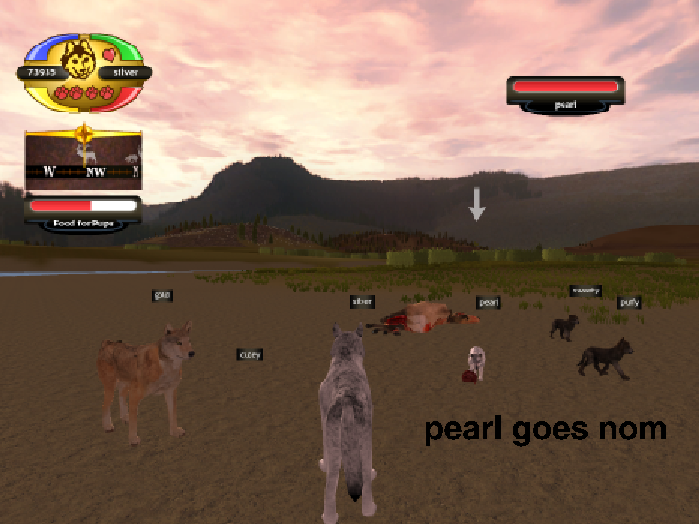
The legacy version of WolfQuest follows the player’s wolf as they encounter strangers, learn to hunt, find a mate and raise pups, up until the pack makes their move to a rendezvous site in the summertime, re-interpreted as an epic journey across the game world amid perilous and stressful threats- swooping eagles and treacherous river crossings. Once the journey was completed, the game was beaten. It was never a perfect game, always a little janky at best, and full of bugs and glitches and exploits. That never bothered me, of course. There was something powerfully escapist about being able to think and act entirely like a wolf without any human worries; it was pure immersion, to run and hunt and howl. At the same time, I felt utterly in control of the world, so much had I treaded over and over again through the two main maps and uncovered every possible glitch, exploit and oddity that lay in the surreal, low-poly hills of digital-Yellowstone. It was a world all my own, and I made my own fun in as many ways I could within the game’s constraints. Sharing the secrets of the EXP bug and the zombie pup among my wolfaboo friends holds the same space in my mind as learning about Missingno. and the Mew glitch. WolfQuest, too, was a cultural touchstone, as this original version, being grant-funded, was free to download and play. Anyone could log onto WolfQuest and be an animal for a little while. Not just through the singleplayer campaign, but through multiplayer, too- with over-the-top chat filters and a very carefully cultivated roleplaying culture and lingo. Every time I logged into this social space, I encountered so many who were just like me. The wolf girls and the weirdos. My pack.
Paradise, though, could not last forever. When I entered middle school, my notebooks were still filled with scrawled drawings of my Warrior Cats OCs and Silver the wolf (the wolf I always liked to play with best in WolfQuest); by the time I finished sixth grade, I had banished them away. It was around this time that my wanderings on the internet had broadened beyond the insular wolfaboo communities I had so enjoyed. I found fandom and fanfiction. Through fandom and fanfiction, I found the Springhole Mary Sue Test. Through the Mary Sue, I found snarky blogs and Youtube channels that made fun of bad OCs and cringe artwork. Of course, these online critics tended to target art from the same scenes I had run in- particularly the wolfaboo. I had been confronted very suddenly with the fact that the things I loved and the things I created were... bad. Cringy. Childish. I immediately took to defacing and mocking all of my old art, adopting an irreverent and mean style of humor like those who had sparked this change in me. I laughed at all the same wolfaboo parodies I now recognize as so ugly and meanspirited. I tried to convince myself that wolves were not my favorite animal, because they were “overrated”. It was embarrassing to be a girl who loved wolves. The snarl of cringe culture killed something very innocent I once had, and in turn I snarled back at those who were like me, as if in a way to absolve myself for the crime of being a wolfaboo. I suspect that the advent of cringe culture somewhat killed the scene.
Deviantart is no longer filled with droves of neon wolves with rainbow wings and scene hair; the wolf girl feels like a relic of a bygone age. Is this because trends have changed with time, or because they were driven from their territory? The website Furscience reports that in a 2020 survey, 73% of the furry respondents identified themselves as male. In a more identity-focused gender survey, 66% identified specifically as cisgender men- both of these are staggering majorities, and ones I found surprising, given the fem-leaning nature of the furry spaces I had grown up in. In another article on the Furscience website, regarding this gender disparity, they cite a 2014 study wherein 81% of women respondents regarded the furry fandom as somewhat of a boys’ club, and an unwelcoming space. While the reasons behind this are likely too complex to point to a single source, it’s hard not to see a correlation between this disparity and how expressions of furriness that were popular with young girls often ended up being targeted by cringe culture. I only recently, in the past few years, began reclaiming my status as a wolfaboo and letting myself earnestly enjoy these “cringe” interests; regardless, even in the depths of my self-loathing, I never stopped playing WolfQuest, and I still play the newer, Anniversary Edition of the game even now. It is and will always be one of my favorite video games. It was simply impossible to kill the wolf in me for good.

The wolf girl of today has become almost entirely split from the furry subculture; now they are much more closely aligned with the therian subculture. Therians are individuals who identify so strongly with an animal, for reasons either spiritual or more mundane, that they often report experiencing involuntary sensations such as phantom tails, wings, ears, as well as various other kinds of “shifts”. While therians were originally a rather niche group, it's exploded in popularity among the youth on platforms like Tiktok. Naturally, one of the most common therian identities is the wolf. But with increased visibility comes increased aggression. The cringy wolfaboo artist has become the cringy wolf therian. Therians report that they are often the target of bullies, both online and in real life, escalating to serious harassment like pulling on wearable tails and filming those who present openly as therian (“gearing”, dressing like an animal, or wearing in-group signifiers) without consent. Most frighteningly, therian identity has been used as a strawman in the far-right culture war of the 2020s, with a pernicious and untrue rumor being spread about therian children requesting litterboxes in classrooms; to date, no evidence has ever been presented for this claim. It is wielded as a hateful cudgel against transgender rights all the same, a way to mock trans identities by invoking the slippery slope and appealing to normalcy.
Once again, the wolf girl is hunted. The world is hostile to those who do not kill the animal inside them.
Is it any wonder that the therian subculture arose from a Usenet group full of werewolf fans? The werewolf, too, is misunderstood and marginalized, beset with strange and societally unacceptable instincts that they must mask. The werewolf’s body is changing, made unfamiliar and terrifying as the feeble disguise of a “normal and acceptable human” becomes so obviously fake. It is too much a man for the world of beasts and too much a beast for the world of man. The mythos of the werewolf has an obvious influence on the mythos of the wolfaboo, as exemplified by Swiftkill’s “fury”, and the countless OCs who have “evil sides” who wholly take over the individual and kill indiscriminately. Back in the day, we used to call this “going insane”. One of my old wolf characters had a bio that read thusly: “she became so obsessed with revenge, she became insane. at random times, she loses her sanity and becomes dangerous. she locks herself up at her den, but her insanity sometimes cannot be restrained”. Another OC of mine in the same vein, a cat, had a bio that read: “she has a perfect personality. she's fun-loving. but without rhyme or reason, she sometimes turns into an evil murderous cat. she has no choice but to watch the evil her other side does. she is afraid to make friends, because she doesn't want them to get hurt. she has tried once to jump of a cliff, but her evil side leaped back up. noone's perfect.” It is a trope I am very familiar with. Much like the werewolf, the insane wolf OC is not by nature a violent individual, but one who is involuntarily transformed into one that enacts that violence, against their will. Often the insane OC will take precautions to prevent their insanity from doing too much damage, much like a werewolf chaining themself up at the full moon’s approach. The lives they take are the source of great anguish to the character when the transformation has passed.
The appeal of the transformation to the teen wolf girl, in the throes of the complicated feelings that come with adolescence and its more complicated social web, of being cruel on instinct without really knowing why, of a body shifting at the mercy of nature’s design, is obvious. The werewolf, too, is an outcast; victim to its own transformation. To attain that wolfish power is to suffer excruciating pain. The bite and the transformation are both physical thresholds of suffering that the werewolf must pass through to become a beast; due to this suffering, it is a creature of pity as often as it is a creature of fear. The body itself is violated by its own monstrousness- a concept ripe for thematic exploration. Despite this interest, the female werewolf is a rare sight in media, especially film. Perhaps this is because she is by nature so subversive to traditional standards of ideal femininity. She is hairy, strong, far too real and physical compared to the smooth and clean image of womanhood that some directors find more palatable. They are not pretty or passive. To admit that a werewolf can be a woman means admitting that a woman can be a real person. Simply put, the feminine, gender-deviant werewolf is everything that the patriarchal gaze finds monstrous. The rare work that does depict female werewolves often hits on this exact discomfort in a way that is both cathartic and empathetic.
The most famous example is the 2000 cult classic Ginger Snaps (as well as its two sequels), a film which follows two sisters, Ginger and Bridgitte. The two have morbid fixations on death and are emotionally dependent on each other due to the bullying they face from the kids at their school, vowing that they’ll either leave their Canadian hometown by the time they’re 16, or commit suicide. Their codependent bond, though, is shaken, when Ginger is bitten by a werewolf that had been roaming the neighborhood on the night she gets her first period, and begins the slow transformation into a wolf herself. Her lycanthropy coincides with symptoms of puberty: hair where it wasn’t there before, new, adolescent sexuality, menstruation, and urges to bite and kill and rip. While Bridgitte searches desperately for a cure (as in Ginger Snaps, the transformation from girl into wolf is permanent), Ginger becomes more dangerous and aggressive, becoming jealous and protective of Bridgitte. When Bridgitte finally stands up against her sister, rejecting their suicide-pact, it is too late to save Ginger. She is already a wolf, and is accidentally killed by her sister, lunging onto a knife that Bridgitte was holding. The wolf lays peacefully as she dies, and Bridgitte holds her and weeps. The first film explores many topics through an explicitly feminine lens: puberty, sexuality, bullying, the rot of suburbia, trauma (with the wolf attack and its aftermath being framed almost like an assault), and emotional incest. The second film is also biting, commenting on addiction, psychiatry, medical abuse, and harm reduction, as Bridgitte, having been contaminated with Ginger’s werewolf blood, is dependent on the monkshood cure to remain human, and has been forced into a rehab center. Through the werewolf myth, a voice is given to those topics the mainstream would rather not discuss.

Another such example of the werewolf used as a metaphor for feminine trauma is the prog-rock album Monarch of Monsters, by the My Little Pony fan-musician Vylet Pony. While the album wears its pony influences on its sleeve, it also works well as a wholly original work, and can be enjoyed without that context. Wolf’s lupine transformation and spree of murders are brought on by repressed memories and sexual trauma, and is used as a metaphor for responding to cruelty with more cruelty, and for aspects of the transfeminine experience. Wolf’s reign of terror culminates in a suicide ritual, the Daybreak of Red Rivers, represented through an epic 22-minute long track, titled Sludge. However, the story does not end when Wolf dies. Crucially, Wolf’s redemption in the latter half of the album, brought on in the afterlife by the sheep deity Aria, does not return her to her normal, equine form. Rather, she becomes their hunting dog, seeking out lost souls much like herself, changed through kindness. The album cover, as explicit as it is, represents this dynamic, the violence of the wolf quelled by the softness of the lamb- with the prey animal the one who is dominating the predator. In Monarch of Monsters, Wolf is both victim and murderer- a perfect example of the werewolf’s duality.
A third example, and one that synthesizes the myth of the werewolf and the wolfaboo subculture, is the short film Bolavlk, hosted on Youtube by the animator sournoodl. It follows the relationship between a 13 year old girl, Laura, and an 18 year old online friend, Isaac. They both like to draw wolves, each having their own sparkledog fursonas. Isaac uses their online friendship to exploit Laura for artwork that she is uncomfortable with drawing, blackmailing her with the artwork she had previously given to him. On one of these occasions, he requests that she redraw an NSFW piece to feature a dog’s “bits” instead of a human’s, giving her three days before he enacts his revenge. Too cowardly to look up reference photos, even on an incognito tab, she attempts to lure a local feral dog close enough to see, much like how Isaac had lured her. Instead, she ends up being bitten, and the dog runs away. She gives in, and googles “dog bits” reluctantly in order to satisfy Isaac’s request, as he promised it would be the last one. However, he makes another request, and this triggers a sudden, lycanthropic transformation in Laura, one of rage towards the online grooming she had been subjected to, finally spilling over. While the art of her fursona was the avenue through which Isaac had abused her, it is also the source of her self-expression, as she scrawls vent art in her math notebook, and, in the final scene, transforms into her very own sparkledog ‘sona. Bolavlk is a perfect representation of the emotions around online grooming and growing up on the internet, and completely understands the appeal of the wolf to the teenage psyche.
Through these works, a canon of the werewolf girl has finally begun to codify itself. Transformed not merely physically, but emotionally, through trauma and the injustices of society. In a world that expects women to be docile and nonthreatening, the wolf becomes the outlet for the suffering woman. The wolf lashes out when the girl cannot. Is it any wonder that we wanted- nay, prayed- to become werewolves? In spite of the pain and the suffering it would incur, we did not want to be human anymore.
And so we turned to spells.
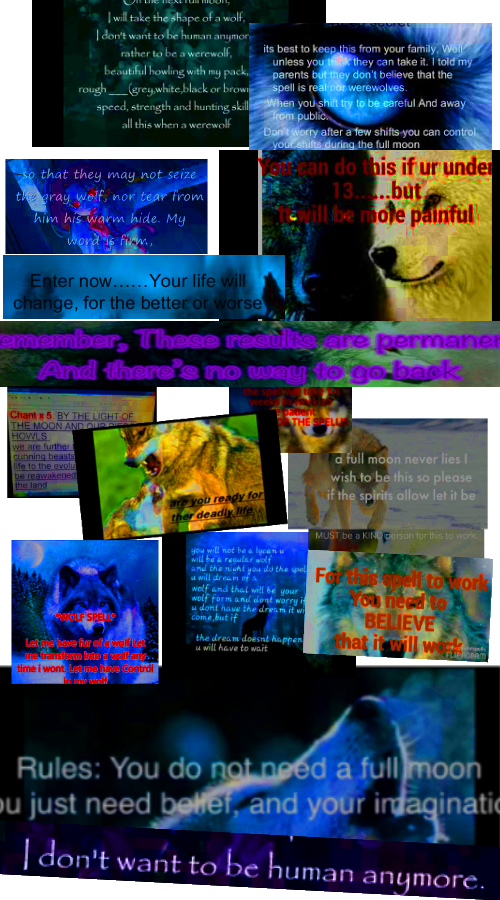
The “real werewolf spell” spread across the internet in those days, through old webpages and Youtube videos, an online grimoire of various incantations that were meant to trigger a lycanthropic transformation. Some were simple, merely requiring you to remember a chant; others were more complicated, requiring candles, crystals, and a full moon. There are variations on this trend- mermaid spells, vampire spells, and more. But the werewolf was by far the most common. Many werewolf spells will list side effects and warnings but will also list benefits of the transformation; subversively, it is presented not as a curse, but a desired outcome, nearly unanimously. At the heart of them all is a desire to not be human anymore. There’s a certain desperation to all these wishes and incantations, the same desperation that drove us to identify with the wolf in the first place.
I tried many of these spells. I tried so many times; I tried them alone, staying up late until the quietest hours of the night; I tried them at sleepovers, invocations whispered among friends who didn’t take it quite as seriously as I did; I tried on the full moon, somewhere between belief and hope. It's hard to express but this feels so significant in retrospect. I felt fundamentally out of step with my peers, with other people, with the systems on which society is built, in ways that led to significant mental health issues later on in my adolescence. I responded to it by hoping for something. Anything. Any taste of that wild-blooded freedom, the thrill of the hunt and the comfort of a pack. A world that made sense. I think we all wanted that, to shed our skin and our human woes, transformed by the trauma of being forced to the margins and wishing desperately for our bodies to reflect that reality. In a way, the wolf girl cultivated her own digital occult. Spells and rituals and therianthropy and subliminals and affirmations all carry the same legacy, an online folklore all her own. I too take this moonlit path- I am a werewolf, so apparently all those spells worked. I take my willingness to suspend my disbelief in my own transformation, and let it be a source of comfort. I spend time outside on full moon nights and let my instincts take me beyond rational logic, into the wolfishness I so love. It is not so difficult to stop being human, for a little while each month- a mundane spirituality.
It is difficult to explain what it means to me, to be a werewolf. What I do know is that my transformation has been a positive one. Since I began my monthly transformations, I have paid special attention to my own feelings, and to my local environment, as it is my territory. Something about it has been galvanizing me to pick up the trash I sometimes find by the lake in my neighborhood and to help my girlfriend with planting native plants in our yard, cultivating our own little habitat. It is a good place to be a wolf, now. It's made me more considerate to myself and others. It's made me a better listener to all the sounds of nature around me. It's an escape. A reminder to care for my territory and my packmates. To give my pain and trauma a name and a shape I can engage with. It's comforting to stop worrying, and be an animal, to give me the power to change what I can when life is overwhelming. It is a little ritual, a reason for revelry, that I have ascribed meaning to. Something to look forward to with each full moon.
And I feel things, too, as I let my mind go bestial and banish my thoughts. I feel my muzzle stretching out of my human mask, feel my tail wagging behind me, my paws bounding on the earth, my ears flicking as I listen to the night-birds and the distant frogs. And so I choose to indulge this realm of the unreal.
The wolf is my symbol, my strength, and my code: a werewolf rejects authority and hierarchy. A werewolf vows to make a positive impact on the earth, much like the keystone species she has become. A werewolf trusts its instincts. A werewolf lifts up others; a werewolf relishes joy and love among the outcasts. A werewolf is resilient and provides for her pack, even when the world beats her down. To transform is to be fully in touch with your feelings (Yes, even your most ugly or “cringe” feelings). A werewolf howls; she makes her joy known. A werewolf is free.
It is transformative. It is to accept and inspire change.
You probably want to be like me: to become a werewolf. You probably always have. You've tried the spells, you've hoped upon hope; it's only right that I put forward my own contribution to our folklore.
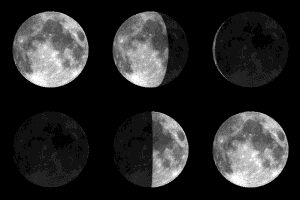 To perform the spell:
First, you must prepare a vessel of water, and leave it in full light on a night with bright moonlight.
Next, you must wait for the next full moon. In a comforting and familiar space outside, under the moon, you must acknowledge something hidden and vulnerable you are ashamed of. Tell yourself it is beautiful. Accept vulnerability and gnaw away at cynicism. Become something feral and sincere that others will recoil at. Tell yourself that you are an animal.
Then, you must pour the water over your head. Let it drip down your fur for a moment, and shake it off much like a dog would.
Now, under the full moon's light, howl out loud and make strange wolfish sounds. Feel your feral cry reverberate in your throat, low and deep and animal. Dance outside in delight on four steady paws. Pad about in the dirt and mud and leaves and filthy yourself. Do not think. Act.
Make this a ritual, a celebration, a part of your life. Dance your wolfdance, every month, when the moon is brightest. When you can perform this rite without any shame or self-loathing, the spell is complete.
You are now a werewolf.

In a way, we all were lycanthropes, human masks with wolfish double lives online. We had our packs, a body of work, a digital occult. This is the power of the wolfaboo oeuvre. Many cries became one chorus.
While the era of wolfaboos and sparkledogs has mostly passed, looked upon as a childish, nostalgic novelty, the power the wolf has as a symbol continues to live on. No matter the form she takes, the wolf girl will always exist- on the margins, perhaps, but always there, alive, and freer than anyone.
We should all aspire to be like her.
